

Ewe feeding still a priority to safeguard performance
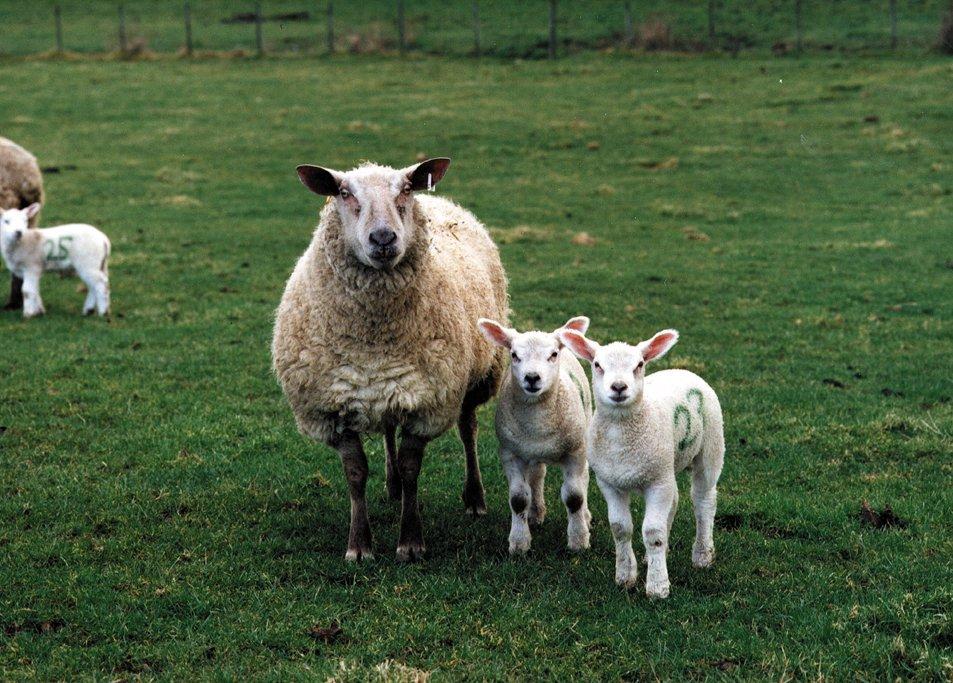
With feed prices having risen substantially during the last 12-18 months, many of the more popular sheep straight feeds may be in short supply as demand for the best value alternative feeds increases. It’s significantly increased the challenge facing sheep producers looking for the most cost-effective way to feed ewes through pregnancy and lactation.
“But correctly feeding the ewe still needs to be a top priority,” states Trident nutrition manager Dr Michael Marsden. “Put simply, the ewe’s nutrient requirements still need to be met, regardless of feed costs or availability.
“In fact, any time adverse weather conditions reduce the quality of the forage available - as happened this last year – the need for additional feed supplementation is likely to be even greater than usual. It might be tempting to cut back on inputs to save some costs, but it’s not worth taking any chances and putting ewe and lamb performance at risk.”
Managing ewe condition during pregnancy is an important part of the production cycle, and one that requires supplementary feeding even when forage quality is good. Achieving the correct body condition score (BCS) of 2.5-3.0 in late pregnancy is critical, as lamb survival and the ewe’s mothering ability (including milk production) are greatly affected by ewe nutrition during the last third of pregnancy.
The traditional approach is to offer incremental increases in the amount of concentrates as lambing approaches, known as step-rate feeding. An alternative is to offer the same amount of concentrates as a flat rate throughout late pregnancy, reducing the need to feed large quantities in the run-up to lambing, as well as to simplify feeding overall (see Table 1).
Table 1 – Example concentrate feeding regimes for a twin bearing ewe fed ad libitum straw*
|
|
Example concentrate feeding regimes for a twin bearing 70 to 80 kg ewe offered ad libitum straw |
||||||
|
Weeks pre-lambing |
7 |
6 |
5 |
4 |
3 |
2 |
1 |
|
Incremental feeding (kg/head/day) |
0.5 |
0.6 |
0.7 |
0.8 |
0.9 |
1.0 |
1.0 |
|
Flat rate feeding (kg/head/day) |
0.9 |
0.9 |
0.9 |
0.9 |
0.9 |
0.9 |
0.9 |
* Quantities recommended should be split into meals to avoid feeding more than 0.5kg/head at any one time.
“Aim for an energy content of at least 12.5MJ ME/kg DM, plus 1618% crude protein if feeding hay or silage, or 20% for straw-based rations,” states Dr Marsden. “The level of feeding can then be varied around those figures in Table 1 to match forage quality and the different needs of each group in the flock – slightly less for ewes that are over-fit, slightly more for thin ewes, ewe lambs still growing or if forage quality is poor.”
According to Dr Marsden, simple mineralised pelleted blends may offer the best combination of low cost and simplicity this year, though caution is needed with dry blends that don’t contain even-sized ingredients. Ewes are notoriously fickle feeders, and will happily select the more appealing pellets from a blend and leave a proportion of the minerals and any ground feeds behind.
“If this is a potential problem, look to liquid feeds based on molasses or bioethanol distillery syrup (low in copper), which are proving to be great value this year as an energy source, even compared to cereals. These liquid feeds will help reduce sorting in simple on-farm blends by binding feed ingredients together, and are an integral part of many commercially produced blends for the same reason.”
Ready-made commercial blends are also worth considering as a way to access popular feeds which may be available only in limited quantities as straights this winter, such as sugar beet feed and distillers’ feeds. And don’t forget the value of liquid feeds in lick feeders as an extremely simple, but highly cost-effective, additional supplement where forage quality is poor.
“For those with access to the necessary equipment, preparing a simple total mixed ration (TMR) could be the approach which gives most flexibility,” Dr Marsden continues. “Exploit the lower unit cost of energy from liquid feeds, include a good source of digestible fibre, such as sugar beet feed, wheatfeed or soya hulls, and consider bioethanol wheat distillers’ feed as the main supply of the protein needed.
“And if you’re going to feed cereals, make sure you balance them effectively with sufficient digestible fibre to avoid problems with acidosis. This is particularly important if fed alongside wet and/or acidic silage or lush spring grass, when the risk of acidosis will already be higher than normal.”
Table 2 shows some example rations for pregnant ewes, and shows that effective supplementation doesn’t need to be complicated. The same feeds can be used right through late pregnancy and into lactation, maintaining nutrient intakes to support milk production and early lamb growth.
Table 2 - Example rations for ewes during late pregnancy and early lactation
|
|
% inclusion |
|||
|
|
Option 1 (compound or blend) |
Option 2 (simple mix) |
Option 3 (incl. cereal) |
Option 4 (TMR, incl. liquid) |
|
Forage – fed ad lib |
Good quality hay or silage 1 |
|||
|
Compound or commercial blend |
100.0 |
- |
- |
- |
|
Sugar beet feed |
- |
47.5 |
20.0 |
20.0 |
|
Bioethanol wheat distillers’ feed 2 |
- |
50.0 |
50.0 |
30.0 |
|
ProtoTec3 |
- |
- |
- |
15.0 |
|
Wheat (or barley) |
- |
- |
27.5 |
25.0 |
|
Bioethanol wheat distillery syrup 2 |
- |
- |
- |
7.5 |
|
Vitamins and minerals |
(in feed) |
2.5 |
2.5 |
2.5 |
|
Energy (MJ ME/kg DM) |
12.5 |
12.8 |
13.0 |
12.8 |
|
Crude protein (%) |
18.0 |
20.0 |
20.0 |
20.0 |
1 If forage quality is low, increase the quantity of feed offered by 10-20%.
2 Bioethanol wheat distillers’ co-products contain low levels of copper.
3 Heat-treated rapemeal, an alternative to soyabean meal.
Once the ewe has lambed and is lactating, she still requires large quantities of supplementary feed, and it’s not unusual for a large early-lambing ewe with twins to need 1.5kg/head/day of concentrate during lactation, for example. The simplest and easiest solution is to continue feeding the same supplement used in late pregnancy for at least the first four weeks of lactation – remember that the lamb is entirely dependent on milk for all its nutrients during this time.
Digestible fibre in the ration has also been shown to be extremely important in promoting milk fat production during this time. Research work conducted at Writtle Agricultural College, for example, demonstrated that feeding sugar beet feed as part of a lactating ewe’s ration consistently improved milk butterfat levels, and hence the energy content of the milk. Repeated on farm, the result would be higher lamb growth rates, greater weaning weights and quicker finishing.
“As always, assess forage quality well ahead of when it’s needed, and plan purchased feeds now to make sure you have access to the feeds required to see out the winter,” concludes Dr Marsden. “Most straights, blends and compounds can be bought on forward contract if you’re concerned about supplies running out.
“Just be careful not to pin your hopes on good weather and great grass growth to save the day if feed stocks run low. It might happen, but is it really worth the risk?”
Ends
Find where to buy
Click on the map to go through to find your local merchant.
