

Tackle underperforming rations now to prevent further losses
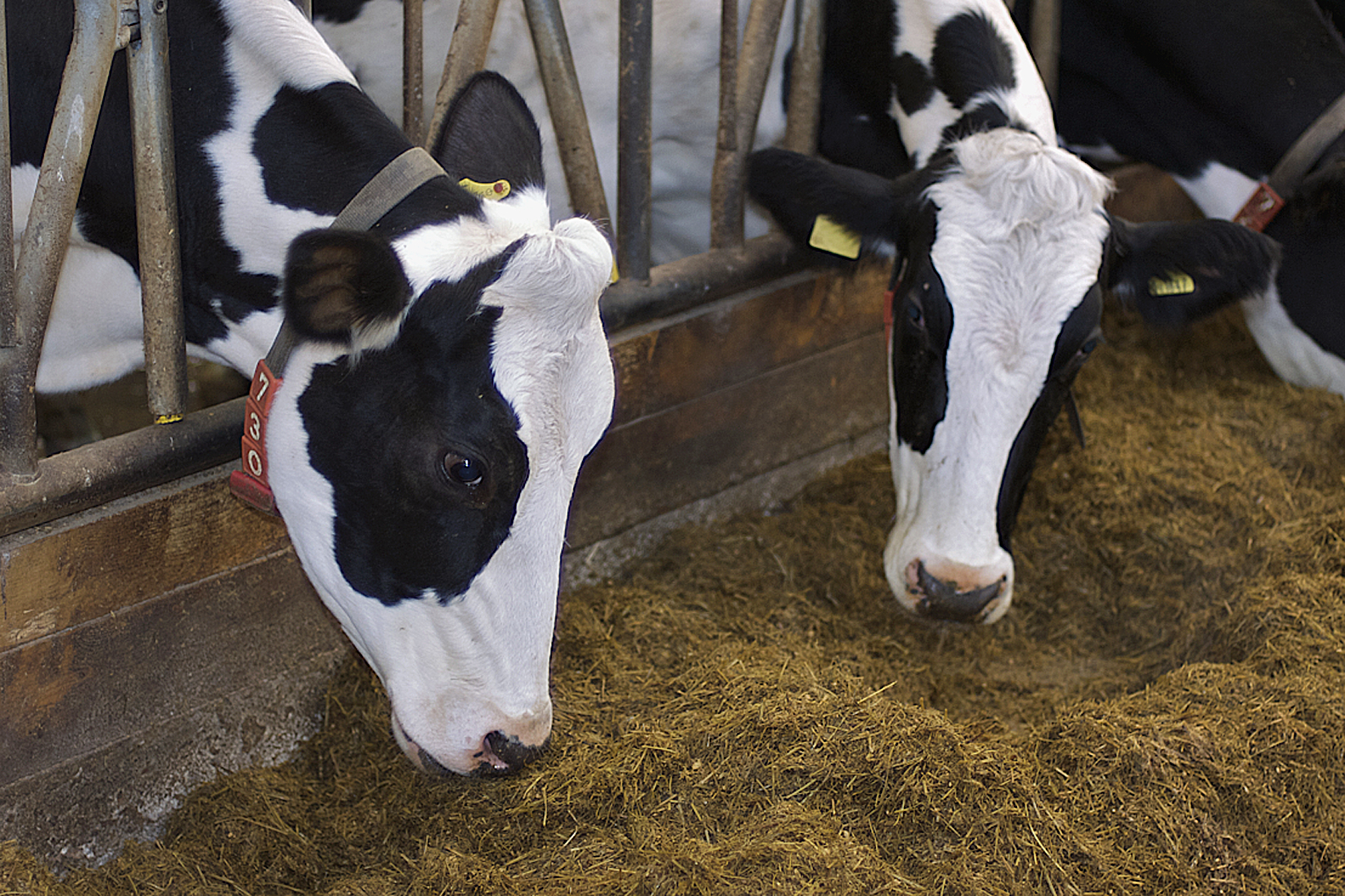
With just under half the winter still to go, and many cows likely to be at least partially housed and fed for several months after that, now’s the time to check on herd performance and adjust feeding strategies accordingly. It’s an opportunity to reassess cow condition, milk yield and quality, as well as fertility, and correct any below par performance before further losses are incurred.
“By January, cows should be well settled onto their winter rations, so it’s an ideal time to evaluate performance, forage stocks, feed buying strategies and plans for the rest of the winter,” states Trident nutrition manager Dr Michael Marsden . “Initial adjustments to the ration based on early winter performance should have been made before Christmas, and at this time of the year we’d normally be expecting just a bit of fine tuning to get the very best out of the cows.
“However, we’ve faced a lot of stiff challenges this winter, with widely varying forage quality, low forage rumen fermentable energy (FME) levels and limited availability of many popular feeds. It means that for a lot of herds there’s still plenty of work to do to get cows milking as they should, in good condition for breeding and still keep feed costs under control.”
Farms with targets based on month of calving, and split between heifers or cows, will be in the best position to monitor where performance is good, and where additional attention is needed. Take into account milk quality as well as milk yield, plus cow condition, and if cows are underperforming ask the hard questions needed to find out why.
One option worth considering to help determine the reasons behind any shortfalls in performance is blood testing. According to Dr Alastair Macrae of the Dairy Herd Health and Productivity Service (DHHPS) based at the University of Edinburgh, the DHHPS has received a higher than usual number of requests for blood profiling this winter to investigate cows not milking to expectation.
“Most of the nutritional issues have their origins in poor silage quality,” he highlights. “The majority of silage samples seem to be either too wet, or too dry and mature, with maize silages tending to be wet, acidic and low in starch due to poor cob production, and wholecrop cereal silages lacking in starch.
“Most farms will already have made attempts to get production back on track by now, but overall the national herd is still not performing as expected. Latest results from blood testing have shown no consistent patterns across the UK – some herds have been short in energy, others have been short in rumen degradable protein (RDP), others have had acidosis issues and some affected by disease issues such as lungworm and liver fluke.
It means that this year’s poor silages are still affecting herd performance despite the problem being widely acknowledged. To get cow performance back on track, the usual feeding rules apply, but the extreme nature of some silages means that initial ration adjustments may not have produced the desired results.
“It doesn’t necessarily mean that you’re heading in the wrong direction, just that even greater changes may needed to correct any nutrient deficit,” Dr Macrae continues.
“Wet, acidic silages will have poor intake potential, and when combined with a higher potential acid loading (PAL) can predispose cows to sub-acute ruminal acidosis (SARA). As a sub-clinical condition, this can often go unnoticed, yet will still seriously undermine production.
“With the risk of SARA still high, keep a close eye out for loose or mixed dung consistency, variable feed intake, undigested food material and fibre in the dung, poor cudding rates and low butterfat levels. All are signs that SARA could be an issue.
“And use blood profiling as a quick and inexpensive tool to monitor the nutritional status of the herd, by highlighting problems with RDP supply or energy balance, for example.”
To help counter issues with SARA, Dr Macrae recommends checking that at least 0.5kg/cow of straw, hay or haylage (chopped to 50-75mm) is included in the diet to provide additional effective fibre, open up the ration and help encourage intakes. If later silage cuts are drier, and it’s practical, consider feeding a mix of the wet and dry silages to help balance overall forage intake.
However, take care to manage clamp faces carefully particularly if opening more than one clamp at a time. Dry silages can quickly heat and allow ingress of moulds, which can subsequently cause problems with mycotoxin contamination, to the detriment of milk yield and cow health.
“It’s also important to take extra care with the overall starch and sugar content of the diet, switching some of the energy supply to digestible fibre sources like sugar beet feed, distillers’ feeds and wheatfeed instead of processed cereal grains,” he adds.
“Other options if extra energy is still required include maize meal, caustic soda-treated wheat (sodawheat) and rumen-protected fats. All either ferment slowly in the rumen or bypass it altogether, so will boost energy supply without further increasing acid loading.”
The main challenge with silages that are dry and mature is the high fibre, low energy content. Although better for rumen function, such silages tend to produce little milk unless adequately supplemented in the ration.
But Dr Macrae warns against the temptation to push concentrates in an attempt to regain lost milk production in this situation, as it’s easy to go too far, to a point where SARA becomes an issue. Instead, the advice is to focus on feeding liquid feeds or moist feeds alongside dry silages to improve palatability and intake, with confectionery blends one of the best value options for any starch needed.
“Molasses and other liquid feeds will also supply much-needed FME to the rumen to help with fibre digestion, whilst at the same time binding ration ingredients together to prevent sorting,” he states.
“As always, it’s the cows that’ll give you the best guide as to whether the rumen is working effectively or not. Watch for poor dung consistency and undigested feed (use faecal sieving), and monitor cudding activity to ensure cows are properly ruminating – as a guide, 60% of cows lying down should be cudding at any one time.
“Low butterfats are often used as an indicator that something is amiss with rumen health, but this year’s low yields are tending to mask that effect. Less milk volume means a greater concentration of butterfat in each litre, even though total butterfat production might be well down.”
The lack of adequate levels of rumen FME also means a limit to rumen microbial protein production, and as a result, many rations are still low in overall protein supply as well as being low in energy. And as Trident’s Dr Marsden points out, if the rumen has reached its limit, the only option remaining is to use rumen-bypass protein.
“As can be seen from Table 1, the dedicated rumen-bypass protein supplements like SoyPass are still the best value source of this type of protein, otherwise known as digestible undegraded protein (DUP),” he states. “What’s more, it’s very easy to simply add a bag or two of a high rumen-bypass protein supplement to the ration to see if that’s what is holding yields back, as you’ll quickly get a response if it is.
Table 1 – Comparison of alternative sources of rumen-bypass protein
|
|
Price 1 (£/t) |
Dry matter (%) |
DUP content (g/kg DM) |
DUP cost (p/100g DUP) |
|
Heat-treated hi-pro soyabean meal (Soypass) |
458 |
87 |
362 |
14.5 |
|
Hi-pro soyabean meal |
401 |
90 |
203 |
21.9 |
|
Bioethanol wheat distillers’ feed |
287 |
90 |
120 |
26.5 |
|
Rapemeal |
268 |
89 |
112 |
26.9 |
1 Prices quoted correct at time of going to press, 29t bulk loads for Feb-Apr delivery on-farm, within 50 miles of source. Prices will vary with load sizes and distance from source.
“Note that bioethanol wheat distillers’ feed is not only slightly better value than rapemeal when it comes to DUP, but also contains an extra 1.2MJ ME/kg DM, so it’s important to consider feed choice carefully when trying to correct rations for the rest of the winter.
“Liquid feeds have been difficult to beat this year in terms of cost-effective energy supply, for example, with savings big enough to justify investment in a new or larger storage tank if required. With additional supplies of distillery syrups becoming available in the future, it makes a lot of sense to upgrade feeding systems now to make the most of the opportunity.”
If acidosis risk is still high even after adjusting the feed ingredient mix, or SARA is suspected, Dr Marsden recommends adding a rumen buffer, live yeast or combination product to the ration. And if dry silages are quickly heating and showing signs of mould, include a mycotoxin binder to minimise the impact on the cow.
Find where to buy
Click on the map to go through to find your local merchant.
