

The right type of growth vital for optimum heifer performance
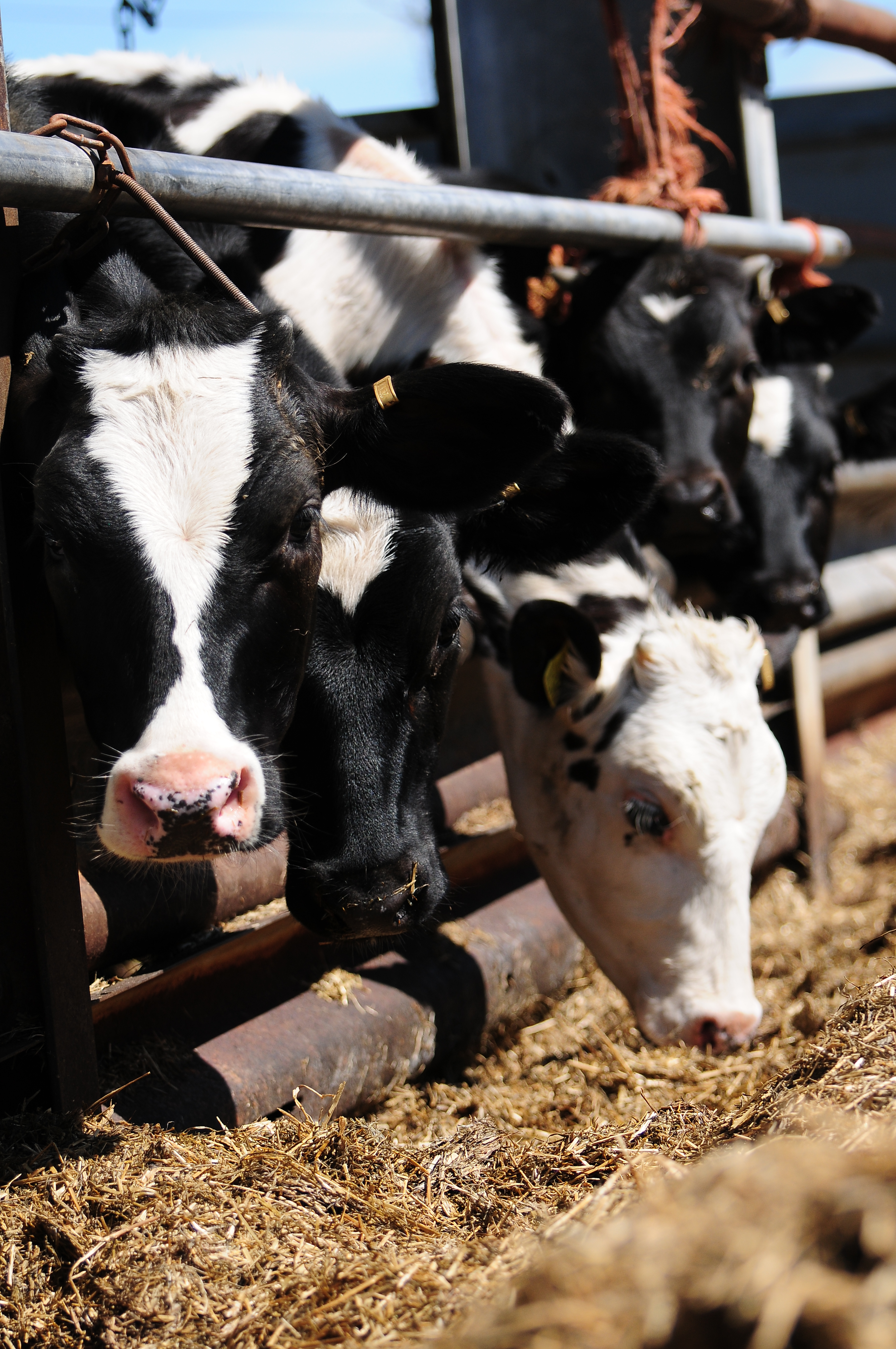
Keeping heifers growing well during the grazing season is one thing, but Trident’s Dr Michael Marsden is also urging dairy producers to make sure it’s the right type of growth this summer.
Correct heifer nutrition is critical if target bulling and calving weights are to be achieved, with good growth needed throughout the animal’s first two years. But managing that growth when cattle are out grazing is particularly difficult, with grass availability, feed value and intake potential all highly changeable.
“Heifers simply will not reach sufficient size and weight at calving within two years unless they receive at least some form of supplementation during the grazing season,” explains Trident technical manager Dr Michael Marsden. “Some producers prefer to allow replacements to grow more slowly over a longer period of time, but it’s now generally accepted that calving at 24-25 months is the best compromise between minimising the unproductive pre-calving period, costs of rearing and maximising lifetime yield.”
“But in addition to rate of growth, the level and type of feeding has a direct influence on productive performance. Overfeeding the heifer, particularly during pre-puberty – and especially if this leads to excessive fat deposition – may have a damaging effect on both first lactation milk production and lifetime yield.”
According to Dr Marsden, the key is to get the balance of energy and protein right, with an over-supply of energy potentially the more damaging. Too much energy can lead to excessive fat pad development in the udder – reducing milk production – and increase body condition score at calving, resulting in a greater risk of calving difficulties and a lower appetite post-calving.
This impact can be seen in the trial results shown in table 1. Groups of heifers were fed either a diet that controlled energy and protein intake, one that allowed ad lib access to energy (but controlled protein), or one that allowed ad lib access to energy and protein.
Table 1 – Impact of feed balance on heifer growth and performance
|
Controlled energy / controlled protein |
Ad lib energy / controlled protein |
Ad lib energy / ad lib protein |
|
|
Average daily gain (kg/day) |
0.77 |
1.13 |
1.21 |
|
Dry matter intake (kg/day) |
4.85 |
6.89 |
7.54 |
|
Body condition score (BCS) |
3.1 |
3.7 |
3.8 |
|
Wither height (cm) |
151 |
160 |
162 |
|
Calving age (months) |
25.2 |
22.4 |
21.9 |
|
% pregnant |
90.6 |
89.1 |
88.4 |
|
Milk yield (kg/day) |
28.4 |
27.0 |
27.5 |
Source: Vicini, et al., 2003
What’s clear is that a greater supply of energy (and to a lesser extent protein) did produce faster growing heifers that were larger-framed at calving, but at the expense of performance once in the herd. The heifers were over-fit and also consumed much greater quantities of feed before calving, even though they calved at an earlier age. Both milk yield and fertility tended to be lower.
“It might sound odd, but with replacement heifers it’s definitely possible to have the wrong ‘type’ of growth,” continues Dr Marsden. “Too fast, and too much energy, and the result is a heifer that is much less able to perform to her genetic potential once she joins the milking herd – remember that beef and heifer growth have very different end objectives.”
Table 2 shows target growth rates and liveweights for Holstein heifers, and it’s important that these are achieved without cattle getting too fat. For unsupplemented cattle growing slowly, the high protein content of grass will typically ensure this isn’t a problem, but once additional feed is added to the diet to achieve a 24-25 month calving target, it’s vital that it balances grass correctly to avoid oversupply of energy. For different sized black and white cattle, as well as other breeds, the target bulling weight can be estimated by using 60% of mature weight (i.e. third lactation or greater), with precalving weight as 85% of mature weight.
Table 2 – Target growth rates and weights for Holstein heifers
|
Target growth rate (kg/d) |
Target liveweight (kg) |
|
|
Birth to 4 months |
0.85 |
145 |
|
4 months to 10 months |
0.75 |
275 |
|
10 months to 12 months |
0.85 |
325 |
|
12 months to 15 months |
0.85 |
400 |
|
15 months to 22 months |
0.85 |
580 |
|
22 months to calving at 24 months |
0.65 |
620 |
“The aim should be for an overall crude protein (CP) content in the diet between 16-18% of the dry matter (DM) at the start of the rearing period, with the option to decrease this as the heifer grows to 14-15% pre-calving,” Dr Marsden states. “In the spring, when grass contains very high levels of rumen degradable protein (RDP), that’s generally very easy to achieve. The challenge at that time of the year is to correctly balance grass protein with enough fermentable energy for the rumen microbes to capture and use it.
“And with grass sugar levels varying on a day-to-day or even hourly basis, that’s not as simple as it sounds. The answer is to focus on supplying energy as digestible fibre, which is not only more slowly released in the rumen – helping to even out potentially uneven energy supply from grazed grass – but will also make up for the lack of fibre in spring grass.”
Spring feed management might seem an odd topic for the summer, but as Dr Marsden points out, unless such plans are made before the winter, few farms will have access to the extra volume of high digestible feeds like sugar beet feed and soya hulls when the time comes. And a failure to adequately supplement heifers in the spring – because grass seems plentiful and high in nutrients – has a significant impact on the level of supplementation required later on during the summer.
“Once the summer months arrive - if it ever stops raining! – grass feed quality begins to drop off. Protein and energy content are more balanced in terms of what the heifer needs, and rising fibre levels will help support good rumen function. But overall energy density – and potentially feed intake – is likely to be lower than what’s required.
“Mature summer grass contains just 15 (poor) to 17 (average) % CP on a DM basis, and 1011MJ ME/kg DM, and it’s important to remember that heifers are rarely grazed on the best pasture. To make up the shortfall typically requires a balanced 16% CP (FW basis) supplement fed at 12kg FW/head/day,” he adds.
Compound feeds are one option, although blends are becoming an increasingly popular alternative, according to Dr Marsden. Blends not only provide great value and the flexibility to adjust formulations as grass feed value changes during the season, he explains, but can also be formulated with or without vitamins and minerals as required.
“Alternatively, consider good value, simple mixes of bio-ethanol wheat distillers’ feed and sugar beet feed,” Dr Marsden states. “A 30:70 mix of these two straights will produce a highly cost-effective 16% CP (FW basis) concentrate, or mix at 40:60 for 18% CP (FW basis). The only extra that’s needed is the addition of 75-100g/t of a specific youngstock mineral/vitamin premix, or separate mineral licks in the paddock (table 3).”
Table 3 – Supplementary feeding using simple feed mixes for heifers grazing summer grass
|
kg FW/head/day |
||||
|
Weaning to 10-12 months |
10-12 to 22-24 months |
|||
|
Average grass |
Poor grass |
Average grass |
Poor grass |
|
|
Grazing (average quality) |
15.00 |
- |
30.00 |
- |
|
Grazing (poor quality) |
- |
12.00 |
- |
25.00 |
|
70% SBF 1: 30% BWDF 2 (@16% CP) |
1.0 |
- |
1.0 |
- |
|
60% SBF 1: 40% BWDF 2 (@18% CP) |
- |
1.0 |
- |
1.75 |
|
Mineral/ vitamin premix |
0.075 |
0.05 |
0.10 |
0.10 |
|
Energy density (MJ ME/kg DM): |
11.3 |
10.9 |
11.2 |
10.9 |
|
Crude protein (% of DM): |
17.0 |
16.0 |
16.9 |
16.1 |
1 SBF = sugar beet feed.
2 BWDF = bio-ethanol wheat distillers’ feed.
Table 3 also shows how the level of supplementation needs to be varied to maintain target daily gain depending on heifer age and grass quality. Any cattle falling behind the bodyweight targets in table 2 should be fed perhaps 0.25kg/head/day more to help lift growth rates whilst avoiding excessive fat deposition.
“The main advantage of mixes involving bio-ethanol wheat distillers’ feed and sugar beet feed is the provision of high levels of digestible fibre, which will promote a butyrate- and acetate-focused fermentation in the rumen,” continues Dr Marsden. “This is known to facilitate the development of the rumen wall, especially development of the rumen papillae in the younger heifer, whilst also reducing the risk of acidosis if grazing grass with a higher feed value.
“It’s also important that the supplement doesn’t contain much more than 16% CP (FW basis) when grass protein is high, as this equates to around 18% on a dry matter basis,” Dr Marsden states. “Excess protein will be converted to energy by the heifer, resulting in an unintended oversupply of energy.”
However, the levels of supplementation in table 3 do still include a safety margin to to safeguard heifer growth. Protein is vital in developing shape, height and frame within the growing heifer without laying down excess fat, so spending an extra £2/t, for example, to avoid lower milk production post-calving is generally money well spent.
“Udder oedema can also be a problem in heifers, particularly if they calve after grazing on high protein, high potash pastures,” Dr Marsden adds. “Being able to reduce the protein content of the supplement simply and easily by altering the mix of two compatible feeds allows this risk to be managed in a very flexible way.
“And if sugar beet feed isn’t available, simply substitute with cereals or soya hulls, adjusting the ratio to suit, but still retaining the benefits of the high quality protein in the distillers’ feed to help promote the right ‘type’ of growth.”
Find where to buy
Click on the map to go through to find your local merchant.
